
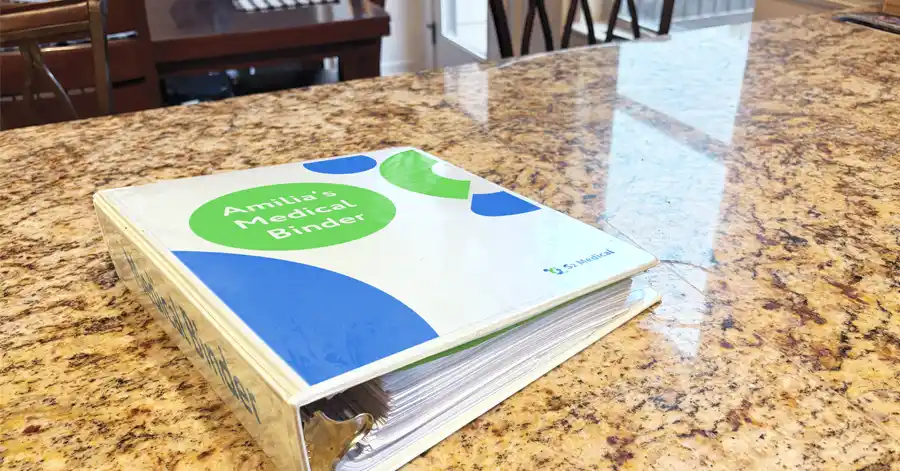
Manage your special needs child’s healthcare easier and more efficiently by having a well-organized system for medical records. This guide will walk you through step-by-step instructions to organize vital medical information into a care notebook to prepare for emergencies, and manage special diets—all tailored for parents of special needs children. Because all families are different, we encourage you to take the ideas that work for your family.
Why Organizing Medical Records Matters
Keeping your child’s medical records organized ensures you’re always ready for:
- Doctor appointments: Quickly provide accurate medical history and updates.
- Emergencies: Share critical information with first responders.
- School and therapy: Provide required documents efficiently.
- New Caregivers: Get nurses and caregiver up to speed easily.
Staying prepared not only reduces stress but also ensures your child receives the best care.
Step-by-Step Guide to Organizing Special Needs Medical Binder
Step 1: Gather All Medical Information
Start by collecting all relevant documents, such as:
- Diagnoses and treatment plans
- Medical history
- Test results and imaging
- Insurance information
- Emergency contact details
Step 2: Create a Medical Care Binder
Use a sturdy three-ring binder to keep everything accessible. Divide it into sections using labeled tabs:
- Emergency Information: List allergies, medications, and key contacts. Add to front a business card sheet of doctors, therapist, etc. for easy access.
- Medical History: Include diagnoses, surgeries, seizure record, and medications. You are always being asked for current medications, easy access is invaluable.
- Appointments: Log upcoming visits and past notes.
- Special Diets: Detail food restrictions, feeding schedules, and recipes.
Organizing everything in one place makes it easy to grab and go when needed.
Step 3: Maintain Digital Backups
Use apps like MyChart, etc. to store digital copies of your child’s medical records. There are apps that make seizure logs easier as well. This ensures access anywhere, anytime.
Step 4: Update Regularly
Schedule a monthly check-in to:
- Add new prescriptions and test results.
- Remove outdated documents.
- Review upcoming appointments and treatment plans.
Emergency Medical Plans for Special Needs Children
Emergencies are unpredictable, but being prepared can save lives. Include the following in your emergency plan:
- Medical ID Cards: Carry cards with essential information, like conditions and allergies.
- Hospital Bag: Pack essentials, including your binder and medications and charger for cell phone.
- Emergency Contacts: Ensure schools, caregivers, and relatives know who to call.
Keep these items in a designated, easy-to-access location.
Incorporating Special Diets into Your Medical Records System
Special diets are a crucial aspect of care for many children with developmental disabilities. Keeping dietary information well-organized is essential to ensuring your child’s nutritional needs are met. Here’s how:
- Keep a Food Log: Track meals and reactions in a notebook or app.
- Plan Ahead: Create weekly menus to ensure compliance with dietary needs.
- Label Foods: Mark safe and restricted items in your pantry and fridge.

Tools and Resources for Parents
Consider these tools to streamline organization:
- Apps: MyChart, and digital note taking apps to organize like Apple Notes, or more advanced apps found in the App Store.
- Supplies: Binders, dividers, business card sheet, and plastic sheet protectors.
- Support Groups: Connect with other parents through local and online networks.
By following these steps, you’ll create a system that’s not only efficient but also empowers you to focus more on your child’s care and well-being.
Stay one step ahead in your child’s healthcare journey. Need help finding resources? Explore our tools and tips for special needs families. Let’s make managing your child’s medical care stress-free and effective.